Bali Beyond the Beaches is about far more than tropical coastlines and luxury resorts. For architects, interior designers, and creative professionals, the island is a living design laboratory where ancient craftsmanship, tropical modernism, sustainable architecture, and cultural storytelling coexist in remarkable harmony. From centuries-old temples carved into volcanic stone to award-winning bamboo structures, serene wellness retreats, and visionary hospitality projects, Bali offers countless lessons in designing with climate, context, and community. It’s no surprise that it has become one of the most inspiring destinations for architecture lovers around the world.
For those who believe that travel is one of the best forms of design education, Bali rewards curiosity at every turn. Every village, courtyard, resort, and public space reveals a different way of thinking about light, materials, landscape, and human experience.
This is precisely the spirit behind Project 101 Explorers, creating immersive architectural journeys where participants don’t simply see iconic projects but experience them, understand their stories, and engage with the people who shape them.
Whether you’re an architect, designer, student or someone fascinated by extraordinary spaces, these are 15 architectural experiences in Bali that deserve a place on your itinerary.
1. Green School Bali: Where Sustainability Becomes Architecture
Perhaps no project has transformed the global conversation around sustainable design more than Green School Bali. Designed primarily from locally sourced bamboo, the campus demonstrates how natural materials can create world-class educational environments without compromising innovation or beauty.
Instead of conventional classrooms, you’ll find soaring bamboo pavilions, naturally ventilated learning spaces, and structures that almost disappear into the surrounding landscape.
What designers can learn:
Material innovation, passive cooling, structural bamboo engineering, and biophilic design.
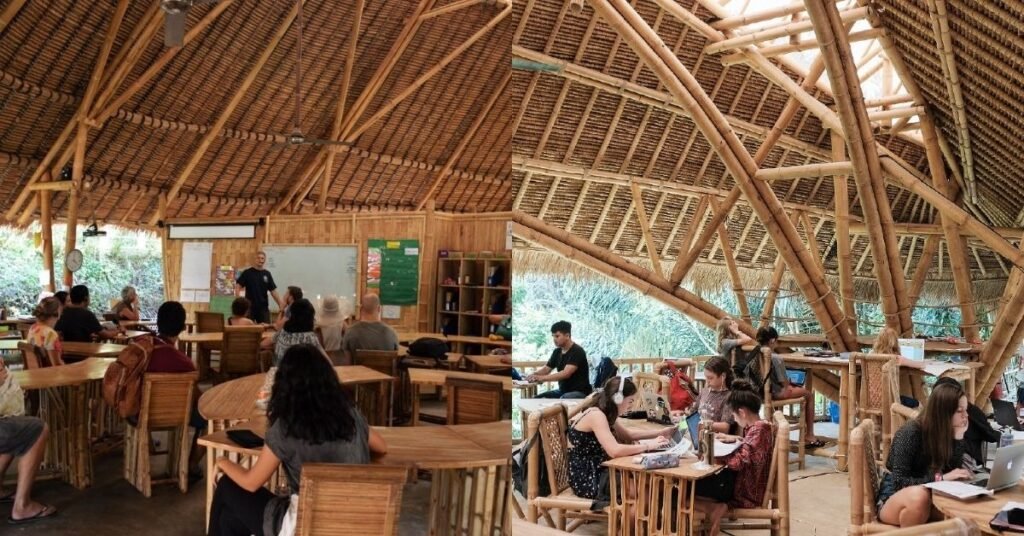
Description: Bamboo classrooms integrated into lush tropical surroundings.
Credits: https://theedgemalaysia.com/article/sustainable-learning-green-school-bali
2. Sharma Springs by IBUKU
Hidden within Bali’s forests is one of the island’s most celebrated bamboo residences.
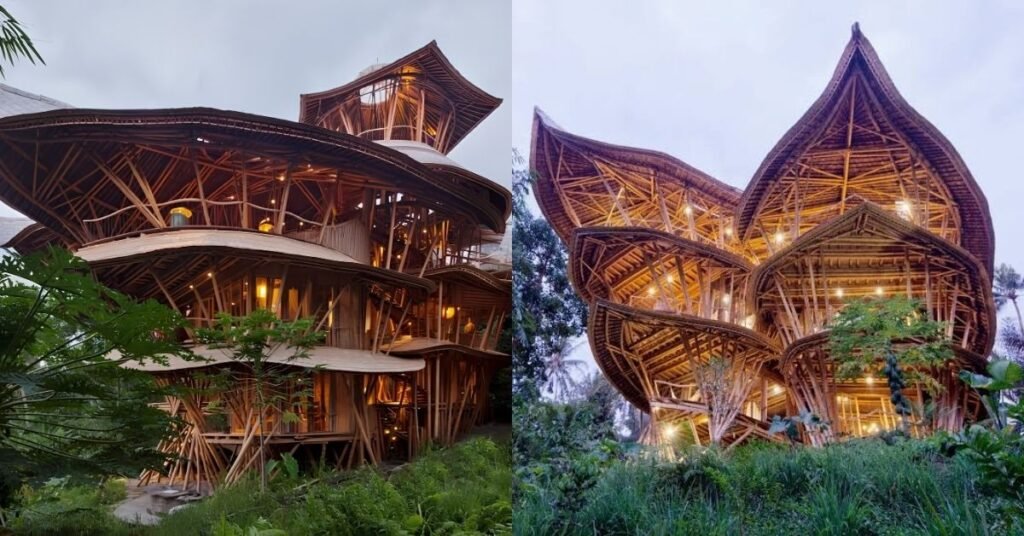
Designed by IBUKU, Sharma Springs rises like a sculptural treehouse overlooking the Ayung River Valley. Every staircase, bridge and curved roof celebrates bamboo’s structural flexibility.
Credits: https://ibuku.com/project/sharma-spring-ibuku/
Rather than forcing architecture onto nature, the home grows organically from it.
3. Bambu Indah: Luxury Through Simplicity
Bambu Indah challenges conventional luxury.
Instead of marble finishes and extravagant décor, the resort embraces reclaimed Javanese homes, handcrafted furniture, open-air living, and carefully restored landscapes.
The result feels authentic, calm, and deeply connected to Bali’s environment.
Design takeaway: Luxury doesn’t always mean excess, it often means thoughtful restraint.
4. Desa Potato Head: A Circular Design Ecosystem
Far more than a beach club, Desa Potato Head has become one of Asia’s leading examples of circular hospitality design.
Furniture made from recycled plastic, locally sourced materials, low-waste construction strategies, and art installations all demonstrate how sustainability can become part of a brand’s identity.
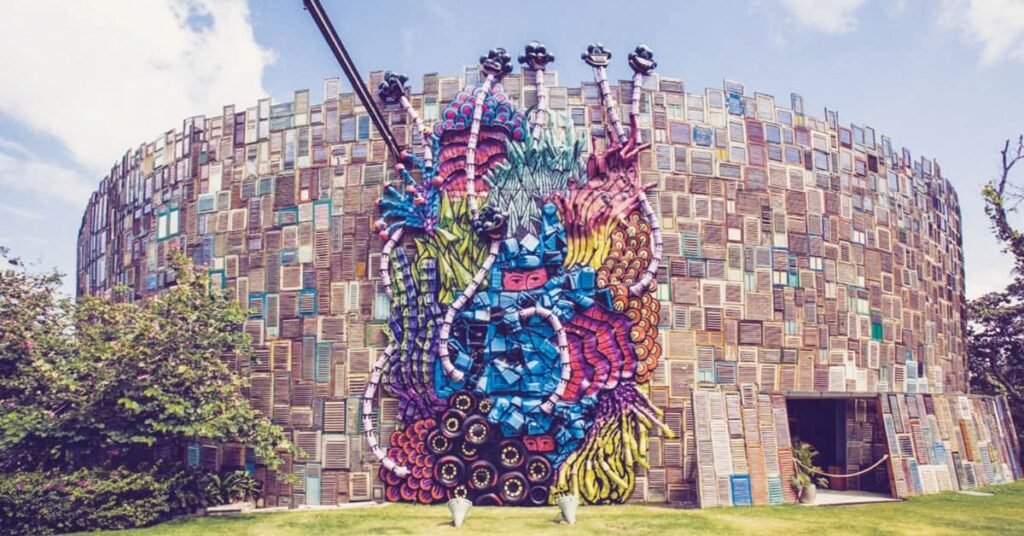
For designers, it’s an inspiring lesson in integrating environmental responsibility with world-class hospitality.
5. Capella Ubud by Bill Bensley
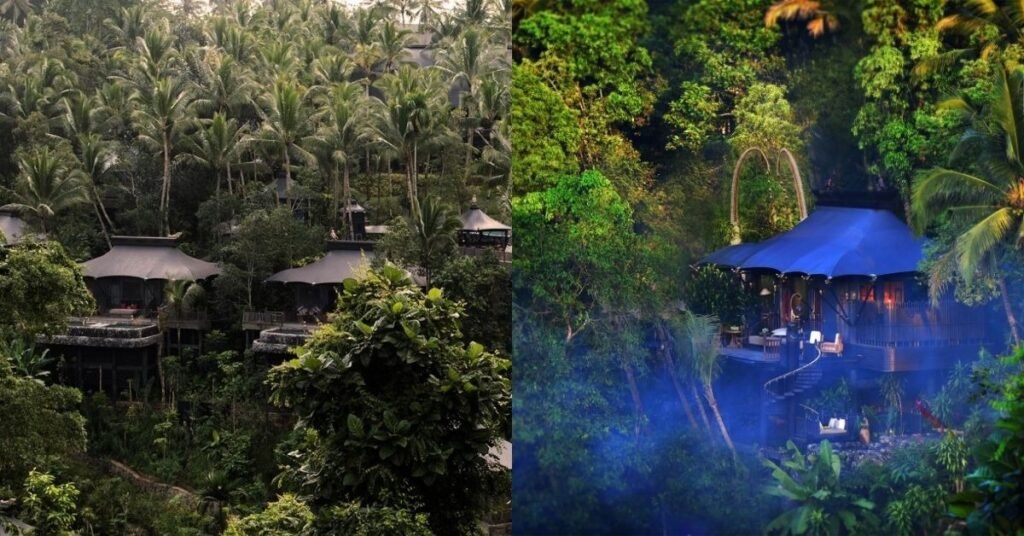
Rather than clearing the forest, celebrated designer Bill Bensley imagined Capella Ubud as a luxurious explorer’s camp nestled within it.
Elevated pathways, tented suites, and minimal site disturbance allow the surrounding rainforest to remain the true centerpiece.
Credits: https://www.bensley.com/project/capella-ubud/
It shows how architecture can coexist with nature instead of competing against it.
6. Luna Beach Club
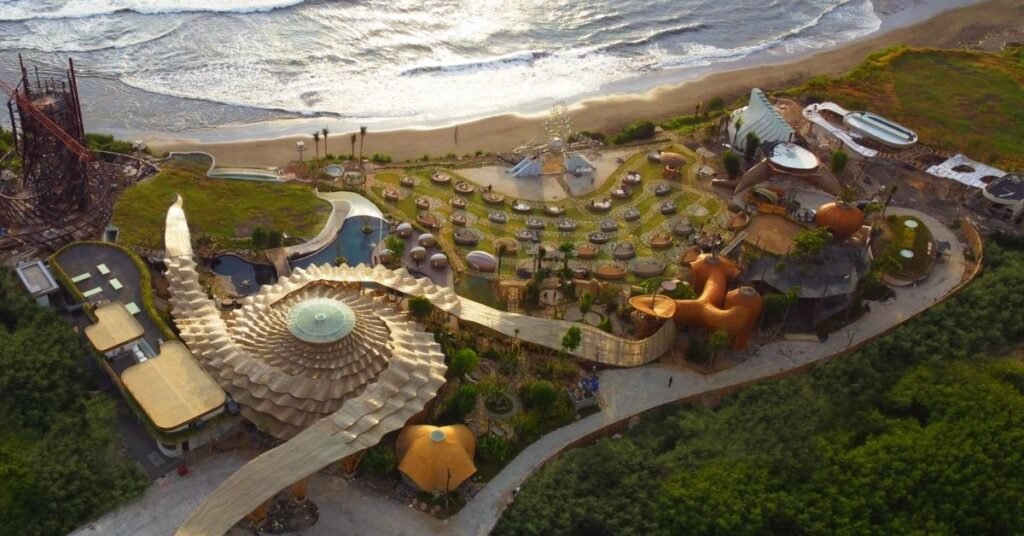
Located within Nuanu Creative City, Luna Beach Club reimagines the idea of a beachfront destination through sculptural architecture, organic forms, and immersive spatial design. Its flowing bamboo-inspired structures, open-air pavilions, and landscape-integrated planning create an environment where architecture becomes part of the natural setting rather than competing with it.
More than a place for dining or entertainment, Luna Beach Club showcases how sustainable materials, biomorphic design, and tropical architecture can come together to create memorable visitor experiences.
Credits: https://inspiralarchitects.com/wp-content/uploads/2024/01/IMG_6848-2048×1152.png
It reminds us that the best experiential spaces are those where architecture, landscape, and human interaction exist in perfect harmony.
7. Pura Ulun Danu Bratan
Floating gracefully on Lake Bratan, this iconic temple complex demonstrates how architecture and landscape can become inseparable.
Mist, mountains, water, and layered temple roofs combine to create one of Southeast Asia’s most photographed architectural compositions.
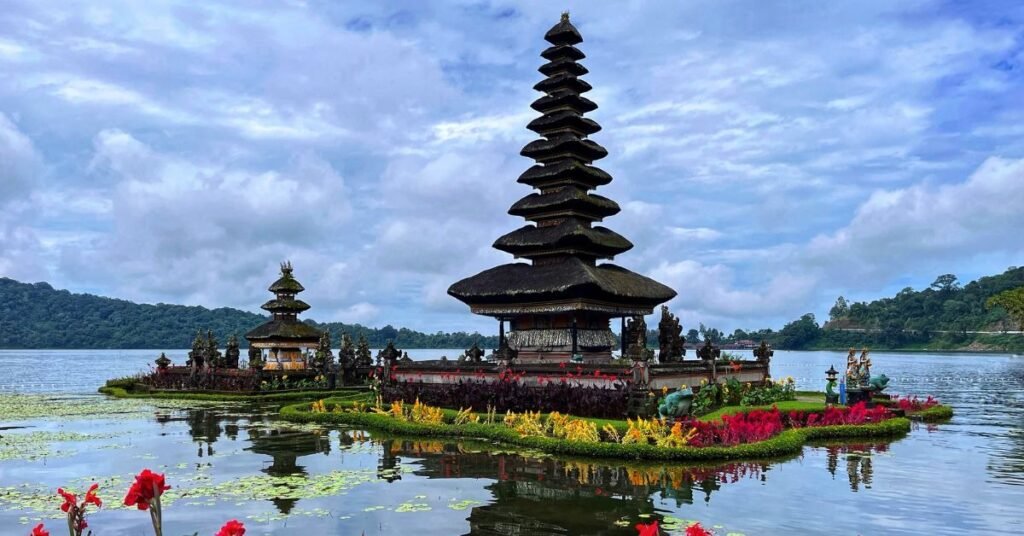
Credits: https://en.wikipedia.org/wiki/Pura_Ulun_Danu_Bratan
Beyond its beauty lies an understanding of sacred geometry, proportion, and cultural symbolism.
8. Pura Lempuyang
Known worldwide for the “Gates of Heaven,” Pura Lempuyang offers more than dramatic photography.
The temple sequence encourages movement, pause, reflection, and gradual ascent—turning architecture into an emotional journey.
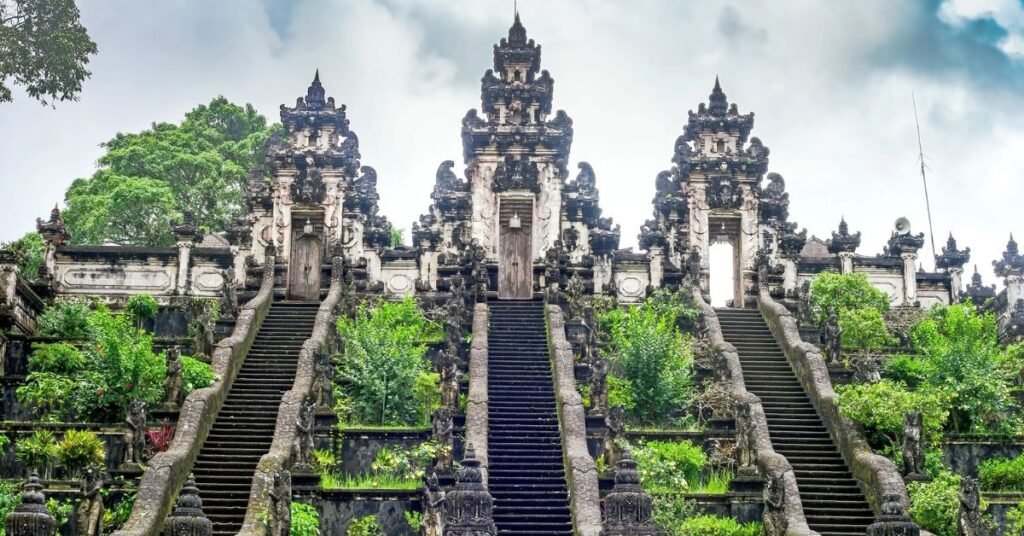
Credits: https://www.cntraveler.com/activities/bali/bali/pura-lempuyang-luhur
Every threshold reveals another carefully framed view.
9. Bali’s Traditional Compounds
Traditional Balinese homes aren’t designed around individual buildings.
Instead, multiple pavilions surround shared courtyards based on spiritual principles, family hierarchy, and climate responsiveness.
This approach creates flexibility while strengthening community life.
Lesson: Great residential design often begins with relationships rather than rooms.
10. Ubud’s Artisan Villages
Villages such as Mas and Celuk continue centuries-old traditions of wood carving, stone sculpture, and metal craftsmanship.
For designers, these workshops reveal how architecture is supported by skilled artisans whose work adds meaning and identity to built spaces.
11. The Apurva Kempinski Bali
This dramatic resort draws inspiration from Indonesia’s terraced landscapes and traditional architecture while incorporating contemporary hospitality design.
Its grand central axis, cascading water features, and monumental arrival sequence create a memorable sense of ceremony.
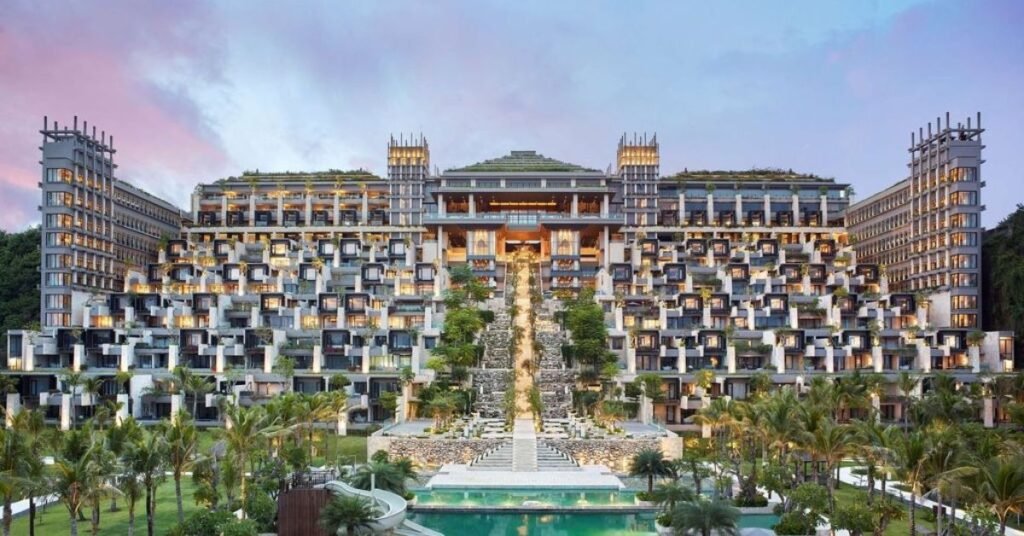
A reminder that hospitality begins long before guests enter their rooms.
12. AYANA Bali
Set atop limestone cliffs overlooking the Indian Ocean, AYANA demonstrates masterful site planning.
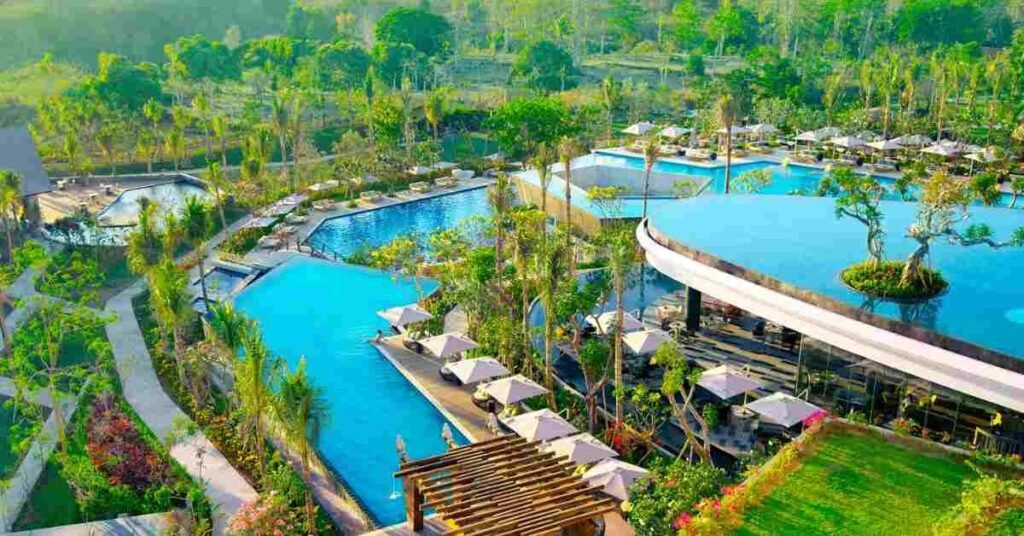
Credits: https://www.cntraveler.com/hotels/indonesia/bali/rimba-jimbaran-bali
Instead of forcing identical buildings across the property, the resort carefully responds to topography, preserving dramatic ocean views while integrating lush gardens and water features.
Also Read: Why Every Architect Should Travel at Least Once a Year
13. Nuanu Creative City
One of Bali’s newest design destinations, Nuanu Creative City brings together architecture, technology, education, sustainability, and art within a single evolving campus.
It’s becoming a fascinating case study in future-focused community planning.
14. John Hardy Workshop
The John Hardy workshop is more than a jewelry manufacturing space.
Its soaring bamboo structures showcase how industrial buildings can be environmentally responsive, naturally ventilated, and architecturally inspiring.
Production spaces don’t have to feel industrial, they can feel human.
15. Jatiluwih Rice Terraces
Although not architecture in the conventional sense, the UNESCO-listed rice terraces demonstrate one of humanity’s oldest examples of landscape design.
The intricate irrigation system known as Subak has shaped Bali’s environment for centuries through collective planning and ecological balance.
It reminds us that infrastructure can also be beautiful.
More Than Buildings: Learning Directly From Design
One of the greatest advantages of experiencing architecture in Bali is the opportunity to understand the stories behind the projects.
Drawings and photographs rarely explain:
- Why were materials selected?
- How tropical climate shaped design decisions.
- What construction challenges were overcome.
- How local communities influenced the outcome.
Hearing these perspectives directly from architects, designers, and project teams transforms observation into meaningful learning.
This philosophy lies at the heart of Project 101 Explorers, where curated design journeys create opportunities for professionals to engage with architecture beyond the surface.
Why Bali Continues to Inspire Designers Worldwide
| Design Element | What Bali Teaches |
| Climate-responsive architecture | Passive cooling and open planning |
| Material innovation | Bamboo, stone, reclaimed timber |
| Landscape integration | Building with nature instead of against it |
| Craftsmanship | Local artisans shaping contemporary design |
| Hospitality design | Emotional, immersive guest experiences |
| Cultural identity | Architecture rooted in tradition yet open to innovation |
Final Thoughts
Bali proves that remarkable architecture isn’t defined by scale or budget, it is defined by its relationship with people, place, and purpose. Across the island, designers discover projects that blur the boundaries between architecture and landscape, tradition and innovation, craftsmanship and technology. Every temple, bamboo pavilion, boutique resort, and cultural space offers lessons that extend far beyond aesthetics.
For architects and designers, visiting Bali is more than a holiday; it is an immersive educational experience. It encourages slower observation, deeper conversations, and a renewed appreciation for how thoughtful design can enrich everyday life.
As Project 101 Explorers continues to create curated architectural journeys around the world, Bali stands out as a destination where every path, courtyard, and structure tells a story worth experiencing firsthand.
Want to be part of the next Project 101 Explorers edition? Registrations for Jakarta and Bali, 20th-25th July are open, follow FOAID and Project 101 for updates on itineraries, partner firms, and how to apply.