
Tadao Ando, the self-taught architect known for his poetic use of concrete, light, and minimalist design.
In 1964, as Japan prepared to host Asia’s first Olympics, the 1964 Summer Olympics, the country also lifted its long-standing international travel ban on its citizens. What may appear to be a minor historical footnote to many became an architectural turning point.
The world was introduced to a visionary who redefined how light moves within a space and proved that concrete is not just a finishing material, but a poetry in built form: Tadao Ando.
The self-taught architect, Tadao Ando, brings a quiet strength to architecture. Without formal training, he learned by travelling, observing, and deeply understanding spaces.
Why should one travel, especially an architect?
In today’s world, inspiration may seem to live at the tip of a finger, a click, a scroll, or a saved image, and suddenly, you are surrounded by ideas and inspiration from around the world. Yet experiences can’t be intangible or just reduced to pixels on screen.
At the peak of creativity stands architecture, a profession that does not merely borrow inspiration but transforms lived experience into built reality. Architects do not design for screens; they design for movement, memory, and emotion. In a world saturated with digital references, they are designing for movement through corridors, for memories formed in rooms, for emotions shaped by light and material.
5 Reasons Why Architects Should Travel
1. To Experience Scale Beyond Drawings

Sunlight pouring through the oculus of the Pantheon, illuminating the vast coffered dome.
Architectural drawings communicate proportion through numbers, but travel allows architects to understand scale through the body. Standing beneath the vast dome of the Pantheon is not just about observing geometry; it is about sensing height, volume, echo, and light. The way sound rises, the way daylight enters spaces, and the way a space feels both monumental and intimate at once, these are lessons no textbook can fully convey. Travel transforms abstract dimensions into lived understanding.
2. To Understand Climate Responsive Design
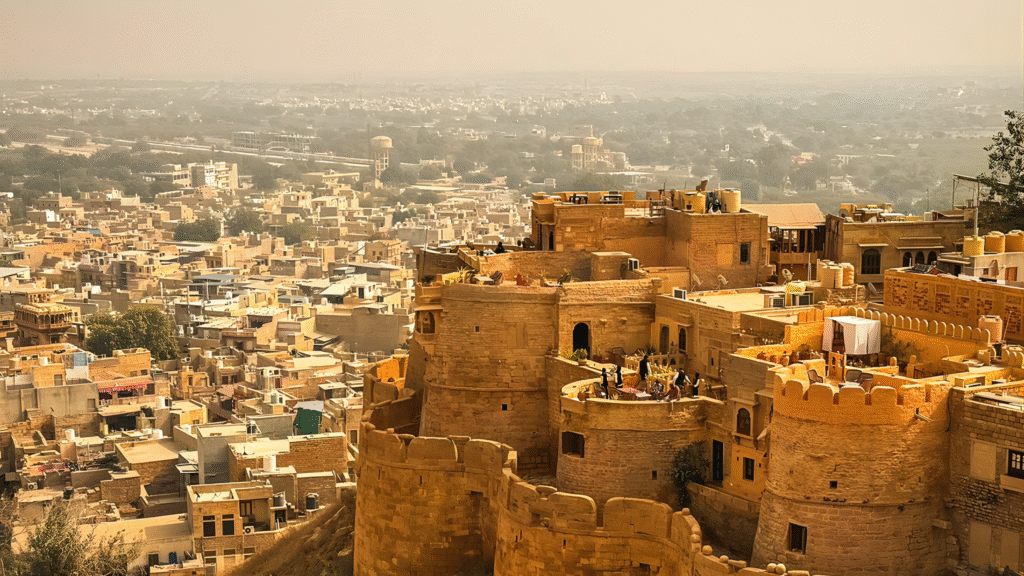
Sunlit streets of Jaisalmer lined with thick sandstone walls designed to protect against the intense desert climate.
Architecture is inseparable from its environment. Walking through the desert lanes of Jaisalmer reveals how thick sandstone walls, narrow streets, and internal courtyards protect against extreme heat. These solutions were not an ambiance choice, they are survival strategies refined over generations. Travel teaches architects how materials age, how buildings breathe, and how design adapts to sun, wind, and rain. It deepens sustainable thinking beyond technical checklists.
3. To Build Cultural Sensitivity
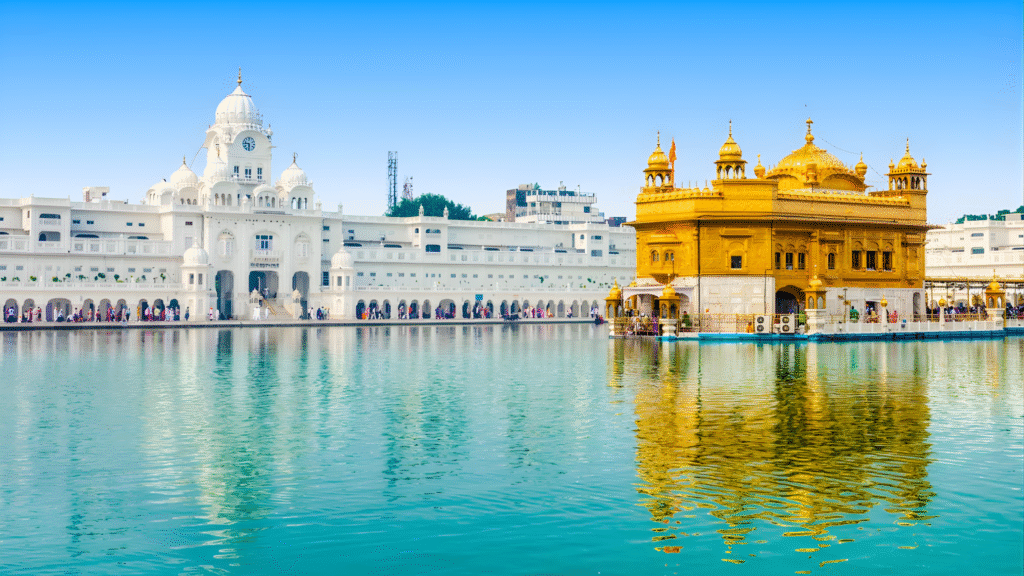
The Golden Temple framed by colonnades and its sacred pool, expressing symmetry and serene reflection.
Architecture reflects how people live, gather, worship, and interact. Experiencing the spiritual calm of the Golden Temple shows how belief systems shape movement, reflection, and materiality. Public spaces, homes, and streets function differently across cultures. Travel fosters empathy, reminding architects that meaningful design must respond to human behavior, not just visual appeal.
Also Read – Top 10 Luxury Trains in the World You Must Experience
4. To Expand Creative Vocabulary

Aerial view of Barcelona showing its clear grid layout and chamfered street corners in the Eixample district.
Each place introduces new construction methods, detailing techniques, and spatial arrangements. From historic cities layered with time to contemporary urban districts experimenting with innovation, exposure broadens creative thinking. Travel prevents design from becoming repetitive or trend-driven. Instead of copying what is popular online, architects begin to interpret ideas through context and personal insight.
5. To Transform Observation into Design Instinct
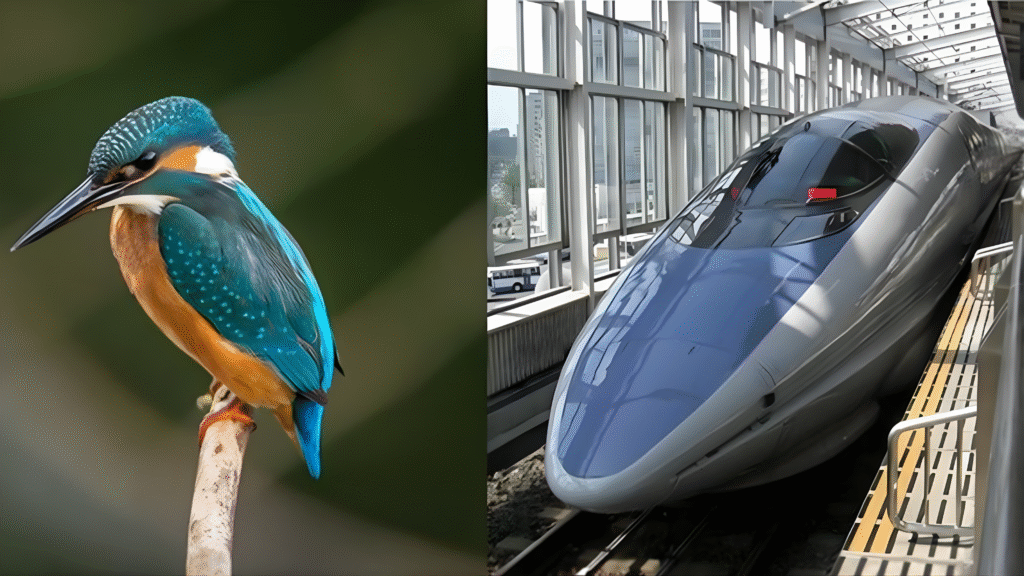
Japan’s bullet train nose is inspired by a kingfisher’s beak to reduce noise and improve speed efficiency.
Travel sharpens awareness. Architects begin noticing how light shifts through the day, how thresholds frame views, and how materials influence mood. These subtle observations accumulate over time and quietly influence future projects. Just as journeys shaped the philosophy of Tadao Ando, travel shapes the mindset behind every sketch and structure. It builds intuition, humility, and depth qualities essential to creating architecture that truly resonates.
For architects and designers, inspiration often lies in everyday moments. When Japan’s famous bullet train faced noise issues while exiting tunnels, engineer Eiji Nakatsu, an avid bird watcher, found the answer in nature. Watching a kingfisher dive into water without a splash, he redesigned the train’s front facade to mimic the bird’s beak, reducing noise and improving efficiency. A high-speed solution came from slowing down and looking closely.
Sometimes, the best journeys in architecture begin with simply paying attention. Which is exactly what Project 101 encourages: taking architects and designers into spaces where inspiration is experienced, not just imagined.
Registrations opening soon. Stay tuned.